|
PH series pre-heaters for Polypropylene sheet
6/25/2015 |
|
|
The history of the polypropylene polymers started in 1954 with the researchers Giulio Natta and Karl Ziegler. This plastic material produced for the first time in the Italian industry by Montecatini (then Montedison) has known a huge success since the very beginning. Among the many applications of polypropylene, today this product has become increasingly more important for the food packaging industry and particularly for disposable cups.
Before the thermoforming process, the material is extruded, calendered, cooled and transformed into rolls. The thickness of the sheet may range from 0.2 mm. to 2 mm.
During the production process, the material is being unwind and then fed into the thermoforming machine through guides with toothed chains passing the infrared heating oven in order to obtain the necessary softness before entering the forming station.
During the transformation of the Polypropylene, it is necessary to take into account the two main mechanical characteristics of this polymer such as the:
- Coefficient of thermal expansion
- Specific heat coefficient of the material
The polypropylene has a thermal expansion coefficient three times bigger and a specific temperature two times higher than APET. Consequently, to process the polypropylene, it is important to pay attention to the heating process and slackening of the internal tensions of the material in order to obtain a stable and qualitative molding process. As we deal with a material coming from an extrusion and calendering process, the polypropylene re-heated for a second time, has the tendency to slack. The material, which is retained in the chains teeth, frequently may show undulations that may be difficult to uneven and therefore creating problems in distributing the material during the forming process affecting the esthetics of the final product.
In order to avoid these drawbacks, it is necessary to preheat the foil to allow the "stress relaxation" of the material before placing it on the transport chains of the thermoforming machine and consequently obtaining a homogenous temperature in the core of the sheet through a slow but uniform heating process. The stress relaxation is obtained by pre-heating the material gradually and under "free" conditions before the thermoforming process as the polypropylene tends to distress naturally during heating when it is not being blocked in the chains.
For this reason, special pre-heaters have been studied and the market offers different solutions. Since the mid-eighties, WM Wrapping Machinery SA has performed a number of tests developing various alternatives (see picture 1) such as infra-red radiation systems, contact by rollers etc.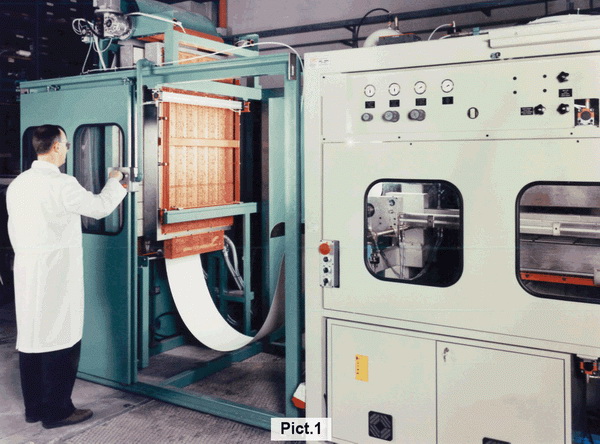
The best final solution that ensured the greatest benefit was the oven with hot air circulation (see pictures 2 and 3).
A special pre-heather has been developed which consists of an insulated structure and mobile roller located on the inside which enables various meters of foil being treated continuously during the pre-heating phase before being entered into the thermoforming machine. Inside the heating chamber, the air is heated and temperature-controlled to a maximum of 130 ºC. A centrifugal fan with an internal high performance auger and impeller with reversed blades, generates an upward airflow. In addition, a special device called "Full air delivery" is installed on the floor, inside the oven, in order to ensure a correct distribution of the hot air flow.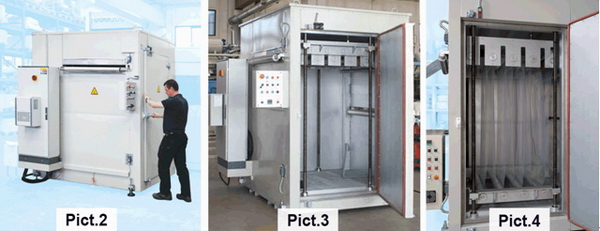
The heating takes place through a group of electric heat-controlled resistances and is controlled by a dedicated probe inside the oven. This PH pre-heating unit is totally autonomous, equipped with a control panel and can be installed easily between the reel-unwinding device and the thermoforming unit. The PH oven may be installed on existing machines at Customers factory. (See picture 5)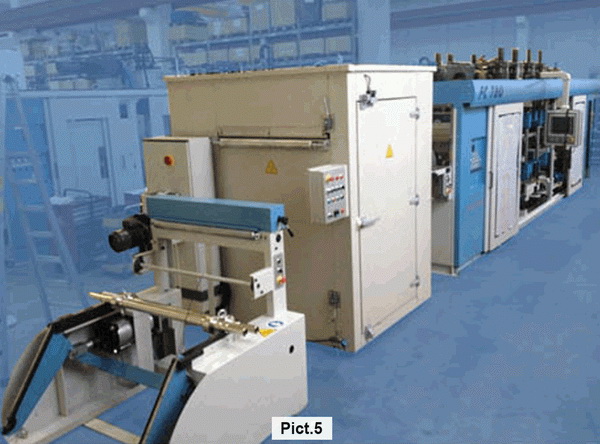
WM is offering the PH 920 and PH 1100 models which are differing in power and maximum size width of the foil, ranging from 920mm to 1,100 mm respectively. These pre-heaters have evolved significantly over the last few years and the last generation of the PH series are the result of the experiences and tests made over the years at WM factory. As already mentioned before, the insulation element is of high importance ensuring a maximum performance with the highest possible energy savings. It's important to highlight that the standard ovens chamber insulation has a thickness of 80 mm.
It is also important to say that the feeding rolls, which consist of a double rollers unit, are aligned in a upper vertical position when entering the material. This allows a quick and easy feeding of the foil by the operator, then, one of the two rolls group moves downward in order to position the material with the best possible distribution in the heating chamber (see picture 4).
The feedback we receive from our customers who already use this kind of pre-heaters it is absolutely positive and these experiences recommend the usage of this device during the processing of polypropylene materials ensuring high performance and top quality finished products. |
|
|
|
|
|
主站蜘蛛池模板:
成人肏屄视频|
亚洲欧美日韩国产手机在线|
xxxxx欧美视频在线观看免费看|
精品人妻少妇嫩草av专区|
欧美日韩免费专区在线观看|
国产激情综合在线看日韩在线|
国产精品一二二区视在线
|
亚洲综合色婷婷七月丁香|
日韩午夜激情|
无码人妻aⅴ一区二区三区69岛|
国产精品美女毛片j酒店|
亚洲人成网站在线播放小说|
粉嫩导航|
日本夜爽爽一区二区三区|
亚洲熟女精品|
WWW.黄色|
亚洲精品毛片一区二区|
欧美精品在线观看视频
|
无码人妻精品一区二区在线视频
|
国产三级精品三级在线专区1|
国产精品大片中文字幕|
欧美一线天|
亚洲第一成人会所|
欧美乱人伦视频在线观看|
国产精品亚洲二区在线播放
|
人妻少妇无码精品|
少妇无码太爽了不卡视频在线看|
久久永久视频|
九九热精品免费视频|
奇米影视777四色米奇影院|
国产成人免费无码视频在线观看|
亚洲精品蜜桃久久久久久|
老妇女性较大毛片|
影音先锋资源网|
无码AV大香线蕉伊人久久|
人人妻人人澡人人爽人人精品97
|
亚洲一区二区三区|
晚上偷偷看片的网站|
国产A V无码专区亚洲AV|
国产人妖ts在线视频观看|
亚洲熟妇另类久久久久久|