|
Better life safety at sea - Emergency Position-Indicating Radio Beacon
5/23/2014 |
|
|
A new EPIRB (Emergency Position-Indicating Radio Beacon) makes it easier to locate people in distress at sea. The beacon is developed and manufactured in Norway.
- The new distress radio beacon takes cross-bearings from multiple systems. Several vessels can participate in search and rescue, and locating survivors becomes a lot more probable, says section leader Knut Asle at Hansen Protection in Moss.
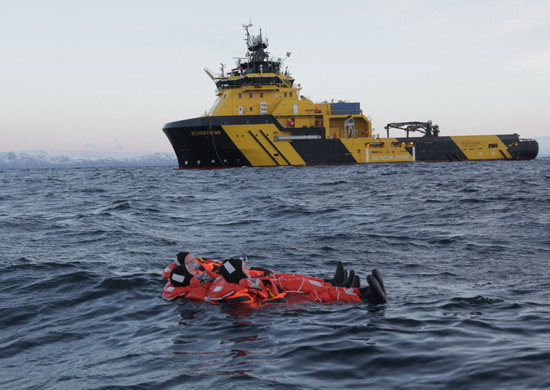
The company has developed the new emergency beacon that will initially be fitted into survival suits worn by workers on offshore oil installations. Over time, anyone who works in vulnerable conditions at sea, such as fishermen or people working on offshore wind turbines, can have the emergency locator fitted in their work wear.
- Previous tracking transmitters used by offshore oil workers have only transmitted signals on the 121.5 MHz (VHF) emergency wave band that only rescue helicopters and rescue boats could pick up. But now we have developed a radio beacon that combines signals on several different frequencies.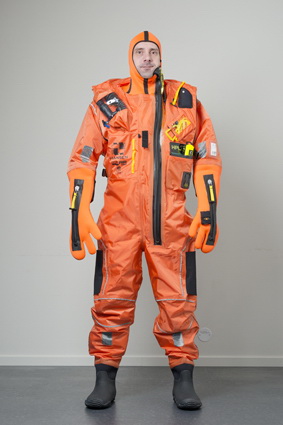 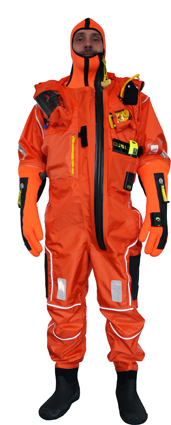
Multiple systems
The beacon is mounted in a bracket in the survival suit. The technology used is not new, but the combination is the first of its kind.
In addition to sending signals over the emergency frequency, it also utilizes AIS, which is an anti-collision system for shipping. The beacon also uses the American GPS satnav system and its Russian equivalent, Glonass.
- Its particularly important in the far north to use the Russian system. This satnav network is located further north and helps make locating a person in distress safer and more accurate, says Asle.
The oil company Eni Norway has already started using the equipment for their workers in the Barents Sea.
- The safety of employees always come first, and as the operator of the first Norwegian oil field to come on stream in the Barents Sea, is important for us to develop customized solutions, says The safety of the employees always come first, and operator of the first Norwegian oil field to come on stream in the Barents Sea, is important for us to develop customized solutions, says HSE Director Liv Nielsen from Eni Norway.
Tested as aircraft components
Hansen Protection has spent double digit millions (NOK) developing the new beacon and advanced new survival suits for the North. The company has worked closely with the oil industry to meet their specific safety requirements.
- Governments, unions and oil companies set very high standards for safety equipment to be used at sea. They have helped to test the equipment. The tests were done in a cold chamber and pools that simulate real-world conditions, such as in the Barents Sea. The equipment is tested as thoroughly as aircraft components, said Knut Åsle.
Hansen Protection worked closely with SINTEF in product development.
The company currently exports survival suits to, amongst others, Canada, China, Russia, Denmark and Germany. The most advanced suits are manufactured at the company's facilities in Moss, while less advanced models are manufactured in the Far East. |
|
|
|
|
|
主站蜘蛛池模板:
色欲久久久天天天精品综合网|
久久国产免费直播|
伊人蕉影院久亚洲高清|
三级片免费网址|
亚洲一区二区精品另类|
久久综合九色综合久桃花|
91在线播|
国产AAAA视频|
国产精品一区二区久久沈樵|
麻豆91蜜桃一区乱码|
999精品全免费观看视频|
国产97视频|
亚洲l女人天堂|
日韩精品亚洲专在线电影|
亚洲成a人片在线观看中|
人成午夜免费视频在线观看|
337p亚洲日本中国大胆69|
国产成人久久精品流白浆|
在线中文字幕国产一区|
中文字幕结果国产精品|
色综合久久综合欧美综合网|
狠狠撸福利导航|
成人国产一区二区三区精品|
亚洲精品第一区二区三区|
国产精品va无码一区二区|
福利视频欧美一区二区三区|
人人妻人人躁|
久久久精品人妻一区二区三区蜜桃
|
亚洲免费人妻|
九九久久婷婷国产综合|
特黄少妇60分钟在线观看播放|
亚洲成色精品一二三区|
日韩,中文,变态,人妻|
精品国产福利在线观看91啪|
国产精品久久精品|
樱桃视频影院在线播放|
1024欧美日韩|
国产av激情久久无码天堂|
精品欧美激情在线看|
亚洲国产成人精品激情|
性色欲情网站|